
Trolleyology (and the art of zombie shopping)
May 5, 2026
ADF Continuation Bonuses – Tax and Related Issues
June 3, 2026
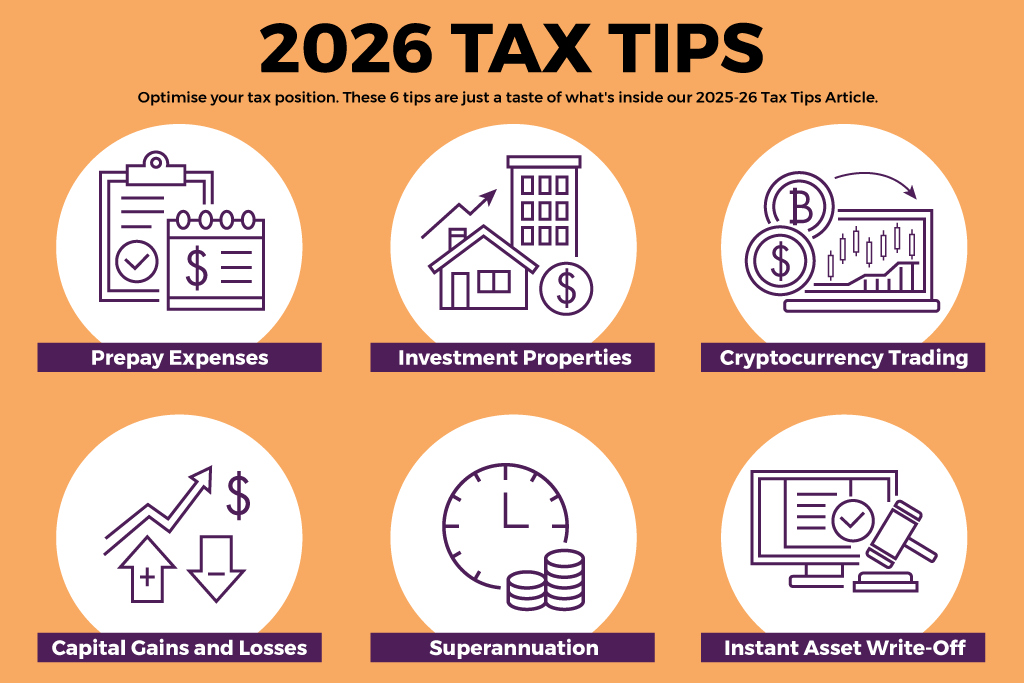
This article is written specifically for Australian Defence Force (ADF) members and their families this 2026 Tax Time, covering the 2025–26 financial year. Inside you’ll find 22 practical tips across lodgement, deductions, investing, superannuation, record keeping and more. Whether you’re filing yourself through myGov or using a Registered Tax Agent (RTA), these tips will help you get it right and keep more of what you earn.
Table of Contents
The end of the financial year is only weeks away. For most of us, this will require the preparation and lodgement of an income tax return for the financial year ended 30 June 2026. Here are some suggestions to assist you in getting it right the first time, hopefully resulting in a welcome refund or at least a tax bill that minimises how much you owe.
Lodgement Essentials
1. Lodge by the Due Date
If you’re preparing your own tax return through the myGov portal, it must be lodged by 31 October 2026 to avoid late lodgement penalties and interest. Most of your income information should be pre-filled by the Australian Taxation Office (ATO) into your on-line tax return. So all you’ll need to do is check that the details are correct, add in your legitimate tax deductions and submit.
It’s important to remember that it may take a few weeks for income, such as bank account interest, to be pre-filled by the ATO. Therefore, to avoid having to prepare an amended tax return, wait a while to check that the correct information is there before submitting your return.
Make sure you include all of your investment income (e.g., dividends, interest and rent) and capital gains or losses (e.g., on the sale of an investment property, shares or crypto currency).
2. Using a Tax Agent / Accountant
If you are likely to miss the deadline or you’d like an extension of time, a registered tax agent (RTA) should be able to lodge your return for you later than 31 October, provided you register with an RTA before that date. There’s more about RTAs and accountants later in this article.
3. If You’re Late, Don’t Wait
If you haven’t lodged a tax return for prior years, we recommend that you lodge the outstanding return(s) voluntarily, rather than getting caught by the ATO. That way, penalties will generally be lower and arrangements may be made to pay off any outstanding tax in a manageable way.
In many cases, you could be entitled to a refund, so lodging outstanding returns may even turn out to be a financially pleasant experience.
Maximising Your Deductions
4. Pre-Pay Expenses
Consider pre-paying certain tax deductible expenses before 1 July. These might include professional subscriptions and legitimate work-related expenses.
The ATO website has a comprehensive list of work-related expenses that may be claimed by ADF members. There’s more on this in the next section.
5. Read the ATO’s Australian Defence Force Guide
The ATO guide for ADF members explains what income must be declared and what expenses are allowable as tax deductions.
Work-related deductions could include car or travel expenses, uniform expenses, self-education expenses, home office and some fitness expenses.
Most importantly, you should not make a claim unless you’ve actually spent the money and you haven’t been reimbursed. These criteria sound obvious enough, but many people who have not met them are identified by the ATO every year. They include people who have not actually spent the money by 30 June (or at all) and people who have not ensured that the expense has gone through their bank account by the end of the financial year.
6. Working from Home Expenses
Many millions of Australians have claimed working from home expenses as a tax deduction in recent years. That’s a large proportion of the workforce and has resulted in it becoming a special area of interest for the ATO.
The rules/methodsfor making these claims have changed over the years which, depending on your personal circumstances, may improve your tax position.
7. Motor Vehicle Expenses
Motor vehicle “business usage” claims amount to many billions of dollars each year. Therefore, it’s hardly surprising that the ATO is especially keen to ensure that taxpayers’ claims are documented and legitimate.
A key point here is that you can’t claim private usage expenses, such as travelling direct from home to work and back. You can read the details on the ATO website.
8. Make a Donation
Consider making a donation of $2 or more before 1 July 2026 to a charity of your choice that has Tax Deductible Gift Recipient status (not all charities do). Make sure you get an official receipt noting that the donation is tax deductible and ensure the amount goes through your bank account on or before 30 June. If it doesn’t, the donation will still be tax deductible, but not until the following tax year.
Investors: Property, Shares and Crypto
9. Read the ATO Tax Time Toolkit for Investors
Tax issues around investing can be confusing and daunting, especially capital gains tax (CGT) and deductible expenses. First time investors commonly make mistakes, sometimes to their financial detriment, often by under-claiming. Others assume they don’t have a tax liability, only to find out years later that they do.
This ATO tax time toolkit for investors is designed as a resource for anyone earning money from investments, whether it’s property, shares or crypto assets.
10. Investment Properties
According to the ATO, nine out of ten rental property investors make errors in their tax returns, especially in relation to interest deductions. A senior ATO official has stated: “we see people refinancing their loans and then using the refinancing amounts for private expenses…such as buying a car or going on a holiday…..what we’re saying to people is that interest needs to be apportioned for the private expense”.
Other areas of focus by the ATO include people renting out their home through Airbnb and not declaring the income and/or overlooking the possibility that selling a property in which a room has been rented out may be (partially) subject to CGT.
The latter can be a complex area, so it’s worth seeking professional advice if you’re in doubt about your tax obligations. See more below about getting advice.
The ATO website has details of the tax deductible claims you can make as the owner of an investment property. We also recommend that property investors should read the ATO Rental Properties Guide. You’d be wise to assume that you’ll be asked searching questions by the ATO at some stage during your period of ownership, especially if you have a large property portfolio. So why not be knowledgeable and well-prepared before the event?
11. Cryptocurrency Trading
It’s been estimated that more than 1 million Australians buy and sell cryptocurrency each year. So it’s hardly surprising that the ATO regularly reminds taxpayers “if you sell, swap or exchange cryptocurrency there are CGT consequences that arise from those transactions”.
Therefore, it’s important to check your crypto transactions (profits or losses) in your pre-filled tax returns with the ATO or through your accountant/RTA portals.
The ATO website contains some helpful information about the tax treatment of crypto trading and investment.
12. Capital Gains and Losses
If you’ve sold any personal assets during the financial year ending 30 June 2026, such as an investment property or shares, any gains may be subject to CGT. A way to reduce the potential liability is to sell a poorly performing asset before the end of the financial year, against which any capital loss can be applied to reduce (or even extinguish) the gain on which CGT is applied.
Of course, it may not be wise to buy or sell an asset purely for tax reasons. There may be other issues to consider, including the long-term purpose and value of an asset in your investment portfolio (such as its possible future use as your family home or as accommodation for children).
It’s also worth remembering that you shouldn’t assume you can simply buy back in July the assets you’ve sold at a loss in June. That action may well be considered by the ATO as an illegal tax minimisation strategy. You can read more about CGT on the ATO website.
Superannuation Strategies
13. Three Ways to Use Superannuation
Here are three ways you can save tax and/or improve your family’s superannuation position by the end of the financial year:
i) Concessional Contributions
Establish whether you’re in a position to make (additional) tax deductible superannuation contributions (aka concessional contributions). These are limited to $30,000 for the year ending 30 June 2026 (rising to $32,500 for the year ending 30 June 2027). As with most issues involving tax, the rules are complex. Therefore, if you’re in a superannuation fund administered by the Commonwealth Superannuation Corporation (CSC) we recommend that you consult the CSC concessional contribution cap estimator. If you’re not in a CSC superannuation fund, your fund’s administrator should be able to assist.
ii) Spouse Super Contributions
If your spouse is not employed or is earning a low income, you may consider making an after-tax contribution to that person’s superannuation account by 30 June in order to claim a tax offset (maximum offset is $540, gradually reducing to zero). You can learn more about the conditions applying to the offset on the ATO website.
iii) Government Super Co-Contributions
If you’re a lower income earner (for example, you may be working part-time), and you add money into your superannuation fund, the government may also make a co-contribution up to a maximum of $500. You can learn more about co-contributions on the ATO website.
Small Business
14. Instant Asset Write-Off
If you and your family are running a small business, you may be able to claim an immediate tax deduction in the year ending 30 June 2026, for the full amount of all capital purchases costing no more than $20,000. Naturally, “conditions apply”. Full details and conditions are outlined on the ATO website.
Getting Professional Help
15. Choosing the Right Tax Professional
If you’re not confident about preparing your own tax return or you need specialist advice, consider using an RTA, or a qualified accountant if your tax affairs are complex.
There are hundreds of options available when choosing a RTA/accountant. Therefore, make sure they are familiar with tax deductions available to ADF members and that you understand their fee structure. This should be a flat fee or an hourly rate, not a percentage of any tax refund to which you’re entitled.
You might be interested to read this longer article which we’ve written about accountants/RTAs, their differences and their qualifications.
16. Be Organised
RTAs and accountants generally charge for the preparation of your tax return by reference to the time they spend on it, so being organised can save you money. If you collect random disorganised receipts or can’t provide evidence to justify the claims you want to make, you’ll end up paying far more in professional fees or will receive a tax refund which is lower than it should be.
Fees, most of which should be tax deductible, can vary substantially (starting at around $100, up to many thousands), depending on the complexity and time spent on your affairs. So the more organised you are, the lower your fees should be.
Make sure you understand up-front how much you’re going to be charged. That way, you’ll avoid unpleasant surprises and disputes.
17. Record Keeping
While our tax system is basically an honour system (aka self-assessment), the ATO’s data matching software, which includes comparing your claims to those of your peers, is very effective.
Taxpayers are selected at random every year for an audit and if you’ve made larger claims than your peers you may be flagged for closer scrutiny. You won’t necessarily be asked every year to provide evidence of your claims, but you should be prepared in case you are. Making false or undocumented claims can lead to substantial fines and regular audits of your tax affairs in following years.
The ATO has produced comprehensive information about your tax record keeping obligations. There’s no compulsory methodology or computer system that taxpayers must use to keep details of tax deductible expenses. One option we recommend you should consider is the myDeductions tool offered by the ATO.
This will at least ensure that complete records and documentation of all your deductible expenses are kept in an orderly fashion, in the same place and in the correct format. We stress that you aren’t required to use the ATO’s service, but it certainly has some significant advantages.
18. Watch out for Investment Spruikers / Scammers
Some RTAs and accountants may also be licensed financial advisers, mortgage brokers or real estate promoters, or they may be part of a network promoting these services.
They may offer to do your tax return for “free” or at a heavily discounted rate, in return for your agreement to undertaking a “financial health review” or signing up to the purchase of products from which they will earn commissions or incentives.
We’re also aware of scammers posing as tax experts promoting the (illegal) idea of withdrawing money from your superfund in order to buy a property. You can read more about super scams on the MoneySmart website.
Be aware of the motives of these advisers before you engage them to prepare your tax return. They may not be acting in your best interests.
Making the Most of Your Refund
19. Use Your Refund Wisely
If you are fortunate enough to receive a tax refund (many ADF members are), use it wisely. An unexpected windfall like this could be used to pay off high-interest debt, set up an emergency fund, or be used to start a savings plan for a larger purchase you may want to make in the future.
Consider sitting on your refund for a short time while you carefully think through your options to really make the most of the opportunity.
Tools & Resources
20. Watch Our Tax Video
For a quick introduction to the Australian income tax system, watch our short Pay Your Taxes video (4 minutes). It’s designed to help ADF members to better understand the system, including their rights and obligations.
21. Do Our Quiz
Have a go at our short tax quiz. There are seven questions that will test your knowledge of the basics and help you to optimise your tax position in 2026.
22. Subscribe to Our Newsletter
Should you need more help or assistance with any of these issues, contact us and consider subscribing to our monthly newsletter which covers tax and other significant consumer issues.