
What’s the Best Superannuation Fund?
March 30, 2026
What is the ADF Family Health Program?
May 5, 2026
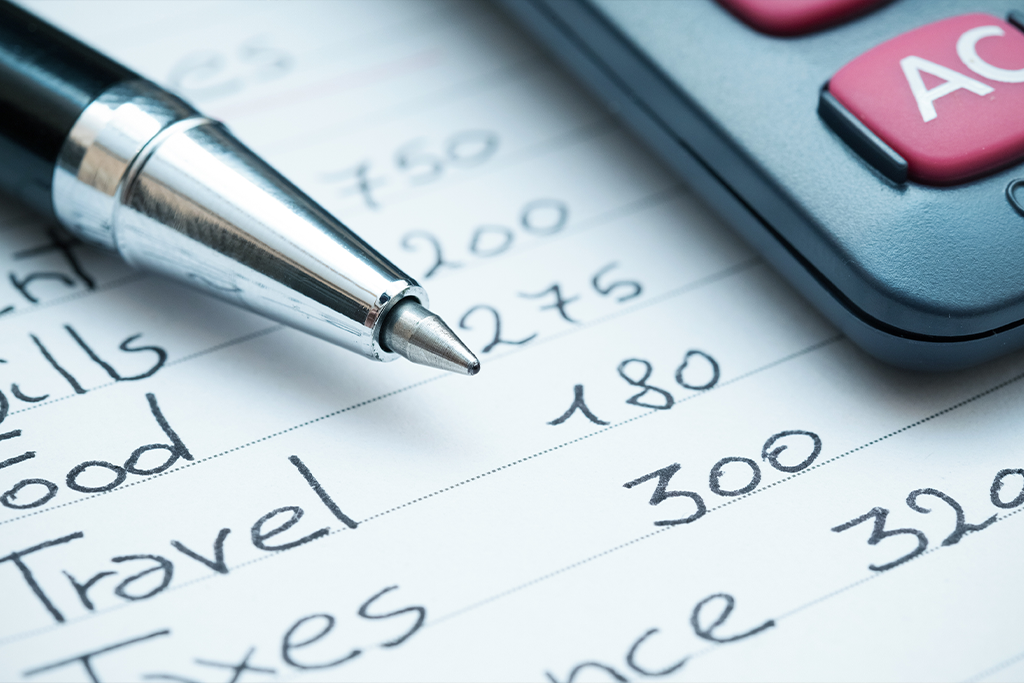
The Household Expenses section of our Budget Calculator is where a lot of surprises live. And right now, there are plenty of them. A family of four is spending around $240 a week on groceries up 11% on the previous year. Fuel prices jumped nearly 50 cents a litre in the space of three weeks in early March 2026. You might find an energy bill arrives higher than expected. Somewhere in the background, the washing machine is making a noise you’ve been pretending not to hear.
When costs jump that quickly, it’s tempting to feel like budgeting is pointless, that the numbers change faster than you can keep up. We get it. This is exactly when your budget matters most. Not because it magically makes things cheaper, but because it shows you where your money is actually going, and where you’ve got room to move. That’s the difference between reacting and responding.
The Household Expenses section of our Budget Tool covers quite a range. When you break it down, there are really three types of costs sitting in there: bills you have to pay (utilities, rates, body corporate), things you need to look after (repairs, maintenance, furniture, appliances, the garden), and consumables; the everyday purchases like food and groceries. Fuel is in the “Other regular expenses” section and is another consumable that fits the pattern. Each one works differently, and gives you different options. Let’s take them one at a time.
Bills you have to pay
Utilities, council rates, and body corporate fees, these are the costs you often can’t avoid and don’t have a great deal of control over. It’s worth understanding what’s actually driving your bills before you assume there’s nothing you can do.
If your electricity bill has jumped recently, you’re not imagining it. Electricity costs are up 37% over the past year according to the ABS. While the current situation when it comes to energy prices is complex, it’s true that prices are likely to rise.
Where you do have a choice of provider, mainly electricity and sometimes gas, it’s worth shopping around. Skip the commercial comparison sites and go straight to the government’s Energy Made Easy tool, which compares plans across states.
You won’t always have that option, though. Water is usually a single provider with no alternative. Gas is available in some areas and not others, and in parts of the country it’s actively being phased out for household use. And for ADF families, a posting move could catch you off guard. What you were paying for utilities in one location might look nothing like what you’re paying in the next; different providers, different climate, different costs. If you’ve recently moved, it’s worth checking your actual bills against what you’ve budgeted rather than assuming the old numbers still hold.
If you’re living in a Service residence or receiving utilities assistance through Defence, check what you’re eligible for – the details are in PACMAN Chapter 7. And for context, the utilities contribution for living-in accommodation is currently $49.58 a fortnight. If you’re running a family home, you already know your costs look very different to that.
Things you need to look after
This is the stretchiest part of the Household Expenses section, because it depends entirely on your situation. If you’re renting and own very little, this line in your budget might be close to zero. If you’re in your own home with a garden, ageing appliances, and a roof that’s seen better days, it could be significant.
And this is where the old question comes in: how long is a piece of string? How much does it cost to replace a fence? Repaint a room? Fix a leaking tap? If you’ve never had to do it before, you genuinely don’t know. That uncertainty can be the thing that stops people budgeting for it at all — it feels too hard to guess, so it gets left out, and then when something breaks, it’s a shock.
The key here is separating two different things: the emergencies you can’t predict, and the costs you can see coming. Your emergency fund, if you’ve got one set up, is there for the hot water system that dies on a Tuesday night. But the washing machine that’s been making that noise for six months? The roof you know will need doing in a year or two? Those aren’t true emergencies. Those are plans that belong in your budget.
It’s also worth thinking about what matters to you as a family. Not every repair or replacement needs to happen right now, and not every upgrade needs to be the most expensive option. Spending according to your values, what actually matters to your household, not what you feel pressured to keep up with — makes these decisions easier and keeps your budget honest.
If you’re renting, the swings and roundabouts work differently. You won’t pay for the new hot water system, but you might be paying more every quarter because the old one is inefficient and if it’s still working, your landlord isn’t obliged to replace it. The same goes for draughty windows, poor insulation, or an ancient heater that chews through electricity. These aren’t costs that show up in your maintenance budget, but they could be quietly inflating your bills. These can be key things to look for when you’re looking for a place to live.
What’s eating your budget? Food, groceries, and fuel
This is the part of the budget that moves the most. Food, groceries and fuel — these are the costs that change week to week, and they’re the ones most people feel first when prices shift.
We’ve already mentioned the numbers: grocery costs up 11% for a family of four, fuel up nearly 50 cents a litre in three weeks. These are huge! And because they’re costs you face every day, they can feel like the part of the budget that’s most out of your control.
So take a look at the patterns, what you can control. Some of these costs are actually quite predictable if you look at the pattern — you know roughly how far you drive each week, and you know roughly what your family eats. The unpredictable part isn’t usually the total, it’s the price. And while you can’t control the price of beef or petrol, you can look at the habits around how you shop, what you buy, and where.
Can changing some habits genuinely save money? We think so, and we’ve written a whole separate article on exactly that. It’s called Trolleyology (and the art of zombie shopping) and it’s about the autopilot habits many of us don’t even notice. It’s worth a read alongside this one.
Working it through
The point of looking carefully at your Household Expenses isn’t to find some magic formula that makes everything cheaper. It’s to know what you’re dealing with, so you can make decisions that make sense for you and your family right now.
That means being honest about priorities. What do you truly need? What do you want? And what’s extra? Those things that are nice to have but could be paused when things are tight? Those are personal questions with personal answers, and nobody else gets to decide them for you.
Sometimes the situation just isn’t great. Fuel is expensive, groceries are expensive, and the bills keep coming. You can’t budget your way out of a price spike. But you can put your hand on your heart and say “I know where our money is going, and I know what we’ve chosen to prioritise.” Now where is that piece of string?
If you haven’t looked at the Household Expenses section of our Budget Tool recently, now is a good time. And if you’ve never used it, there’s no better time to start!
For practical tips on how to rethink your grocery shopping habits, have a read of our companion article, Trolleyology (and the art of zombie shopping).
For more information on budgeting and creating a budget, visit the budgeting page on our website.